
















Understanding Saree Fabrics for Daily and Festive Wear
The choice of saree fabric determines comfort, draping ease, durability, and suitability for different occasions. Fabrics that are perfect for daily routines may be unsuitable for festivals, and vice versa. Understanding fabric properties ensures practical and stylish choices, reduces wear-and-tear, and aligns with personal and generational preferences.
This guide provides an in-depth analysis of popular saree fabrics used in Bangladesh and South Asia, explaining their functional
properties, aesthetic appeal, maintenance requirements, and suitability for casual or festive wear.
Related products and fabric types can be explored at
Flair Hill Saree Collection.
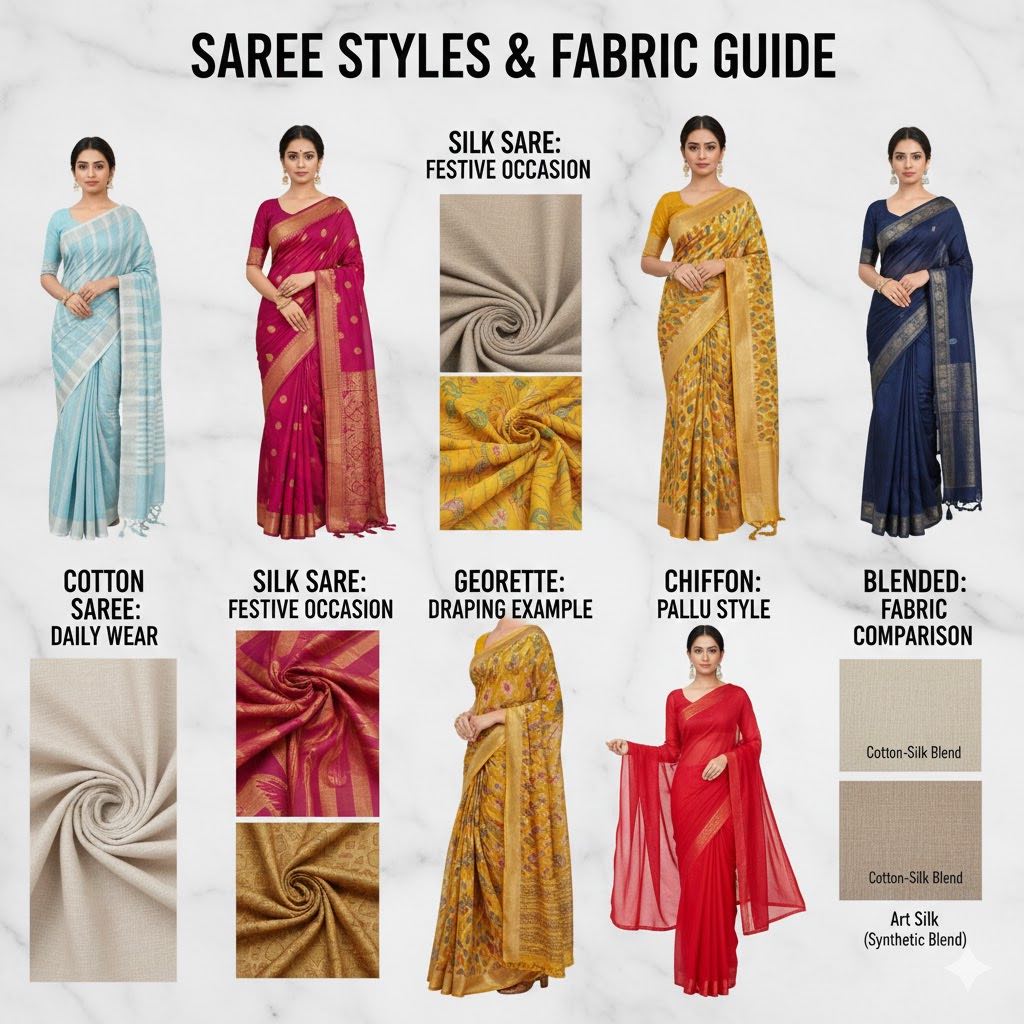
Cotton is one of the most widely used fabrics for daily wear due to its breathability, light weight, and ease of maintenance. Cotton blends, including cotton-silk or cotton-polyester, balance comfort and structure, making them versatile for office or casual events.
For beginners or daily wearers, cotton sarees reduce the risk of slipping pleats and provide good airflow in hot climates. Heavier cotton with minimal embellishment can also be worn for semi-formal occasions.
Explore cotton options under Flair Hill Cotton Sarees for practical daily use.
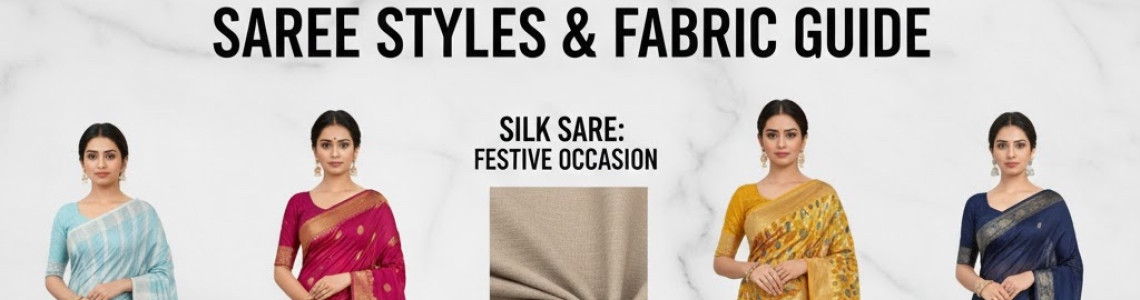
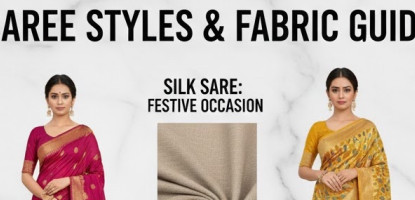
Silk is a traditional choice for festive and ceremonial wear. Its natural sheen, drape, and texture create an elegant silhouette. Pure silk, such as Banarasi, Tussar, or Kanjeevaram, is suitable for weddings, cultural events, and formal occasions.
Silk requires careful handling: dry cleaning is recommended, and storage should prevent creases. Unlike cotton, silk pleats may not hold without structured folding or pins. For daily wear, lighter silk blends provide comfort while maintaining the look.
Check silk saree options at Flair Hill Silk Sarees.
Chiffon is lightweight, flowy, and slightly sheer, making it a preferred choice for modern festive and party wear. It drapes easily over the body, providing a graceful silhouette with minimal pleat effort.
Chiffon sarees are ideal for younger generations or fast-paced events but require careful handling to prevent snags or tearing. Daily use is limited unless reinforced with lining.
Georgette combines durability with lightweight flow, making it popular for both casual and semi-formal wear. Its slightly crinkled texture holds pleats moderately well, and it is easier to maintain than pure silk.
Ideal for festive events where mobility is needed, georgette allows creative draping styles without heavy support from pins.
Blended fabrics such as silk-cotton or poly-cotton are engineered to balance aesthetics and practicality. These sarees are suitable for daily office wear, casual social events, and semi-formal gatherings.
The blends reduce maintenance difficulty while maintaining moderate drape quality, offering durability without compromising style.
See blended saree options at Flair Hill Blended Sarees.
Daily Wear: Cotton, cotton blends, lightweight georgette – prioritize comfort and breathability. Festive Wear: Silk, chiffon, georgette with embellishments – prioritize aesthetics, elegance, and drape.
Selecting the right fabric ensures wearability, reduces maintenance stress, and prolongs garment life.
Older generations often prefer traditional silk or structured cotton for longevity and familiarity. Younger generations may favor georgette, chiffon, or cotton blends for mobility, low maintenance, and modern aesthetics.
This generational adaptation shows that fabric choice is functional and not purely aesthetic.
Learn more about generational adaptation at How Saree Styles Adapt Across Generations .
Daily wear fabrics require simple washing and air-drying, while delicate or festive fabrics like silk need dry cleaning and soft storage. Blends and georgette are moderately forgiving but still benefit from careful folding.
Proper care ensures longevity and maintains drape quality, reducing the need to replace sarees frequently.
Understanding saree fabrics is essential for balancing comfort, aesthetics, durability, and occasion. Cotton and blends suit daily routines, while silk, chiffon, and embellished fabrics are better for festive occasions. Generational preferences further influence practical selection.
By selecting the right fabric and following basic care guidelines, sarees can remain wearable, stylish, and comfortable for all generations.










Leave a Comment