



















Lothal: The Ancient Dockyard City of the Indus Civilization
Introduction
Lothal was a flourishing port-town of the Indus Valley Civilization (also called the Harappan Civilization), located near the modern village of Saragwala in Dholka Taluka, Ahmedabad district, in the Indian state of Gujarat. It dates to roughly c. 2400–1600 BCE—making it about 4,000–4,500 years old—and stands out in archaeological literature as one of the earliest known urban settlements with a planned dockyard and extensive trade networks.UNESCO World Heritage Centre+1
Lothal’s archaeological remains—including residential areas, industrial zones, bead-making workshops, seals, and especially its dockyard—offer some of the most illuminating evidence yet for maritime activity in the ancient world.UNESCO World Heritage Centre+1
Discovery and Excavation
The site was first located in 1954 during surveys by the Archaeological Survey of India (ASI), and systematic excavations were carried out between 1955 and 1960. Excavators uncovered the layout of a complex town with well-defined zones including an upper town, a lower town, marketplaces, residential quarters, industrial areas, and the remarkable dock structure.lothal
These findings placed Lothal alongside other major Harappan cities such as Harappa and Mohenjo-daro, highlighting the vast geographical extent and complexity of the Indus civilization. The excavations also revealed inlet channels and a natural ravine (locally called nullah) that linked the dock to an ancient river course, reinforcing the interpretation of Lothal as an active maritime hub.lothal
Urban Layout and Planning
Lothal’s town planning reflects the high degree of social organization characteristic of mature Harappan cities. The settlement was divided into two main sectors:
-
Upper Town (Citadel): Situated on a raised mud-brick platform, the citadel contained well-laid streets and drainage systems. It also included a large structure interpreted as a warehouse, where goods were packed and stored for trade. Evidence such as seal impressions on charred brickwork suggests systematic sealing for export goods.Mega Marine | Ship Machinery Parts
-
Lower Town: This was the residential and industrial area, where artisans manufactured everyday and luxury items. A major bead-making industry was located here, with workshops producing high-quality carnelian, agate, and other semi-precious stone beads—objects highly prized in ancient markets.Mega Marine | Ship Machinery Parts
The city’s grid layout, efficient drainage networks, and clearly demarcated living and working spaces demonstrate a level of planning and civil engineering far ahead of many contemporaneous cultures.Mega Marine | Ship Machinery Parts
The Dockyard: An Engineering Marvel
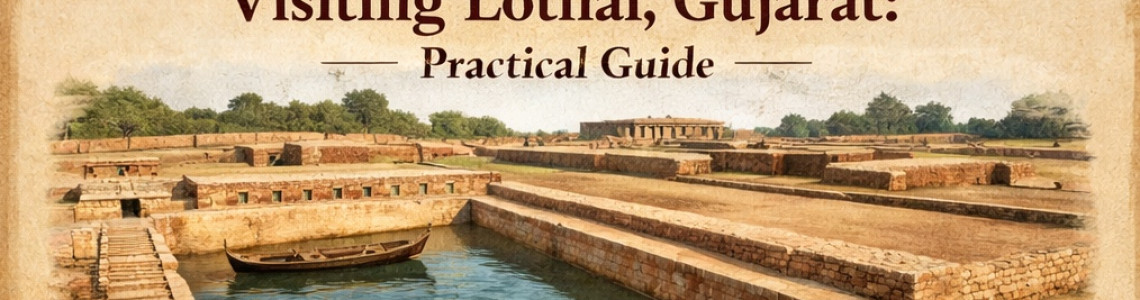
Lothal’s most celebrated feature is its rectangular dockyard, widely regarded as one of the oldest known maritime structures in the world. It measured approximately 217–220 meters in length and 26–37 meters in width, with vertical brick walls, inlet and outlet channels designed to regulate water levels with tidal flows.lothal+1
Design and Function
The dockyard’s engineering shows a profound grasp of hydraulic principles:
-
A basin was connected to an ancient channel of the Sabarmati River, which brought tidal water into the dock during high tides.
-
Inlet and outlet channels allowed controlled filling and emptying of the dock, crucial for maritime operations.
-
The layout was intended to minimize silt accumulation and reduce the risk of flooding, a design concern that still challenges port engineers today.lothal
These features strongly suggest that the structure was not merely symbolic or ceremonial but functional, accommodating boats and facilitating the loading and unloading of cargo. Marine microfossils (foraminifera) and salt/gypsum crystals found in the dock sediments further support the conclusion that seawater once entered the dock—consistent with its interpretation as an operational maritime facility.The Indian Express
Connection to Trade Routes
Lothal’s dock was connected to a broader riverine–maritime network that linked the settlement to the Arabian Sea and beyond. The dockyard likely enabled travel upstream from the Gulf of Khambhat (Cambay) and established Lothal as a pivotal point in trade routes extending from the Indian coast to the Persian Gulf and perhaps even Mesopotamia.indianheritagepost.com
Maritime Trade and Economic Networks
Evidence from Lothal clearly shows that trade was the economic engine of the city. Excavations yielded:
-
Stone anchors and marine shells pointing to seafaring activity.UNESCO World Heritage Centre
-
Seals and sealings with origins traceable to the Persian Gulf region, indicating long-distance commercial links.UNESCO World Heritage Centre
-
Beads and ornaments with stylistic similarities to items found in Mesopotamian sites, illustrating shared design traditions and active exchange.lothal
Merchants in Lothal engaged in both local and international trade. Goods produced in the city included:
-
Beads and semi-precious stone ornaments
-
Cotton textiles
-
Ivory products
-
Copper and bronze tools
These were likely exported via maritime routes, while imports may have included metals, luxury items, and raw materials from distant regions.lothalgujarat.com
The standardized weights and measures used in trade across the Indus civilization, including at Lothal, underscore the sophistication and organization of Harappan commercial practices. Such systems facilitated fair exchange and efficient long-distance trade networks.Reddit
Craftsmanship and Industry
Beyond trade, Lothal was a center of specialized crafts. Bead-making in particular was highly developed, involving precision drilling and uniform shaping techniques that set Harappan beads apart in ancient markets. Artifacts such as unfinished beads, raw materials, and specialized tools found at the site attest to an organized industrial process.lothal
The recent discovery of Ernestite drills—tools used for drilling hard stones—in fresh excavations confirms the advanced level of stone-working at Lothal. These drills, previously known from other Harappan sites, signify technical continuity and shared craft traditions across the civilization.The Times of India
In addition to beads, artisans worked with metal, shell, ivory, and terracotta, producing a wide range of items for both local use and trade. The diversity of craft production reflects an integrated urban economy where industrial and commercial activities were closely linked.Culture and Heritage
Environmental Challenges and Decline
Despite its success, Lothal eventually declined, likely due to environmental changes. The same tidal flooding that once enabled maritime access may have contributed to frequent inundations, making the site less viable as a port town over time. Evidence of repeated flooding and silting suggests that natural factors gradually undermined the functionality of the dockyard, contributing to the settlement’s abandonment.UNESCO World Heritage Centre
The drying up of the ancient river channel further diminished Lothal’s accessibility to maritime traffic, ultimately severing its connection to larger trade networks. These environmental pressures likely intersected with broader socio-economic changes affecting the Indus civilization around 1600 BCE.UNESCO World Heritage Centre
Legacy and Cultural Value
Lothal’s legacy lies in its maritime heritage and urban sophistication. It provides rare physical evidence of early port infrastructure, complex trade relations, and industrial specialisation in the ancient world. Because the Indus script remains undeciphered, much about Harappan society is still unknown; however, Lothal’s material culture offers a window into the economic and technological capabilities of one of the world’s earliest urban civilizations.Reddit
Today, the site is preserved by the Archaeological Survey of India, and efforts are underway to highlight its significance through heritage projects and museums. A proposed National Maritime Heritage Complex aims to interpret and exhibit the maritime history rooted in Lothal’s ancient achievements, underscoring the city’s contribution to India’s long-term engagement with the seas.The Times of India
Conclusion
Lothal stands as a testament to the ingenuity and reach of the Indus Valley Civilization. Its dockyard remains one of the earliest pieces of engineering evidence for organized maritime trade, and the city’s bustling economy, craft industries, and planned layout reflect a level of societal complexity unmatched in many contemporary cultures. Though environmental changes eventually led to its decline, Lothal’s archaeological record continues to reshape our understanding of early urbanism and global commerce in the Bronze Age.
Leave a Comment