



















Visiting Lothal, Gujarat: Accommodation, Transport, Food, Tips, Gear, and Guide

Overview
Lothal is an excavated archaeological site of the Indus (Harappan) Civilization located in Dholka Taluka, Ahmedabad district, Gujarat, approximately 80–90 km southwest of Ahmedabad city. As a protected heritage site under the Archaeological Survey of India (ASI), Lothal prioritizes conservation over tourism infrastructure. Visitors should plan logistics in advance, especially for accommodation, food, and local transport.
Accommodation
Where to Stay
There are no full-service hotels at Lothal itself. Accommodation options are therefore concentrated in nearby towns and cities:
-
Ahmedabad: The most practical base. It offers a full range of hotels—from budget lodges to premium properties—reliable transport, hospitals, and dining options. This is the preferred choice for most visitors, researchers, and students.
-
Dholka: A smaller town closer to Lothal with limited lodging options, typically basic guesthouses or small hotels. Comfort and amenities are modest.
-
Other nearby towns (e.g., Bagodara area): Availability is inconsistent and usually not suitable for international or first-time travelers.
Practical Advice
-
Book accommodation in Ahmedabad and plan Lothal as a day trip.
-
If staying outside Ahmedabad, confirm water supply, electricity reliability, and hygiene standards in advance.
-
During peak tourist seasons (winter months), book early.
Transport
Reaching Ahmedabad
Ahmedabad is well connected:
-
Air: Sardar Vallabhbhai Patel International Airport has regular domestic and international flights.
-
Rail: Ahmedabad Junction is a major railway hub.
-
Road: National and state highways connect Ahmedabad to major cities in Gujarat and neighboring states.
Ahmedabad to Lothal
Distance: approximately 85 km (one way)
Typical travel time: 2.5–3.5 hours, depending on traffic and road conditions.

Transport options:
-
Private car or taxi (recommended): Most reliable and time-efficient. Allows flexibility and return the same day.
-
Bus: Public buses run from Ahmedabad to Dholka; from Dholka, local transport (auto-rickshaw or shared jeep) is required to reach Lothal. This option is slower and less predictable.
-
Tour operators: Occasionally available through Ahmedabad-based heritage or academic tour groups.
On-Site Mobility
-
The site is explored on foot.
-
Paths are uneven in places; there are no electric carts or internal transport.
Food and Drinking Water
Food Availability
-
No restaurants or cafés operate at the Lothal site.
-
Small roadside stalls may appear seasonally, but availability and hygiene are inconsistent.
Where to Eat
-
Ahmedabad: Wide range of vegetarian and non-vegetarian food options, including Gujarati thalis, North Indian cuisine, and international food.
-
Dholka: Limited eateries serving basic Indian meals; quality varies.

Recommendations
-
Carry packed food or snacks when visiting Lothal.
-
Bring sufficient drinking water, especially in summer.
-
Avoid relying on unverified roadside food if you are sensitive to hygiene standards.
Travel Tips (Essential)
-
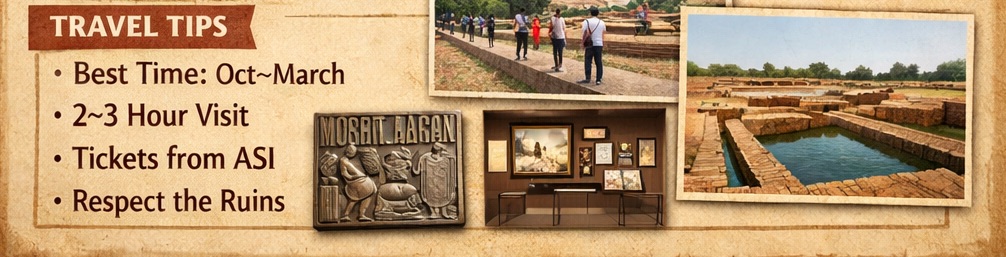
Best Time to Visit
-
October to March: Cooler temperatures and clearer conditions.
-
April to June: Extremely hot; risk of heat exhaustion.
-
July to September: Monsoon season; site may be muddy or partially inaccessible.
-
-
Timing
-
Visit early in the day (morning hours) to avoid heat and crowds.
-
Allocate 2–3 hours for the site and museum.
-
-
Permissions
-
Entry tickets are issued by ASI.
-
Photography is generally allowed for personal use; restrictions may apply for tripods or commercial filming.
-
-
Facilities
-
Toilets and shade structures are limited.
-
Medical facilities are not available on site.
-
-
Respect the Site
-
Do not climb on ruins.
-
Do not remove stones, soil, or artifacts.
-
Follow ASI signage strictly.
-
Essential Gear to Carry
Because Lothal is an open archaeological landscape, preparation matters.

Clothing
-
Lightweight, breathable cotton clothing
-
Long sleeves and trousers for sun protection
-
A hat or cap
Footwear
-
Comfortable walking shoes or light trekking shoes
-
Avoid slippery soles, especially during monsoon season
Sun and Heat Protection
-
Sunscreen (high SPF)
-
Sunglasses
-
Reusable water bottle
Additional Useful Items
-
Umbrella (for sun or rain)
-
Small backpack
-
Notebook or guidebook (especially useful for students and researchers)
-
Camera or smartphone with sufficient battery (charging points are not available)
On-Site Guide and Interpretation
Museum
Lothal has a site museum maintained by ASI, displaying:
-
Seals and seal impressions
-
Beads and ornaments
-
Tools and pottery
-
Models explaining the dockyard and town layout
Visiting the museum before or after walking the ruins helps contextualize what you see on the ground.
Guides
-
Official guides are not always available on demand.
-
Some days may have local guides with basic explanations.
-
For in-depth understanding, consider:
-
Hiring a guide from Ahmedabad
-
Visiting with an academic group
-
Reading a scholarly guidebook beforehand
-
Signage
-
Informational boards exist but are brief and non-technical.
-
Interpretation relies heavily on the visitor’s prior knowledge or guide support.
Who Should Visit
Lothal is particularly suitable for:
-
Students of archaeology, history, and urban studies
-
Researchers and educators
-
Cultural tourists interested in early civilizations
-
Serious heritage travelers
It may be less suitable for travelers expecting entertainment-oriented attractions or luxury facilities.
Safety and Health Considerations
-
Heat and dehydration are the main risks.
-
There are no emergency medical services on site.
-
Mobile network coverage is usually available but may fluctuate.
-
Travel with companions when possible.
Conclusion
Visiting Lothal is a serious heritage experience rather than a leisure outing. With limited on-site facilities, careful planning is essential. Staying in Ahmedabad, arranging private transport, carrying food and water, and preparing for outdoor conditions will ensure a safe and rewarding visit. For those interested in the origins of urban planning, maritime trade, and ancient engineering, Lothal offers rare and valuable insights grounded in solid archaeological evidence.
Leave a Comment